
Areca Palm
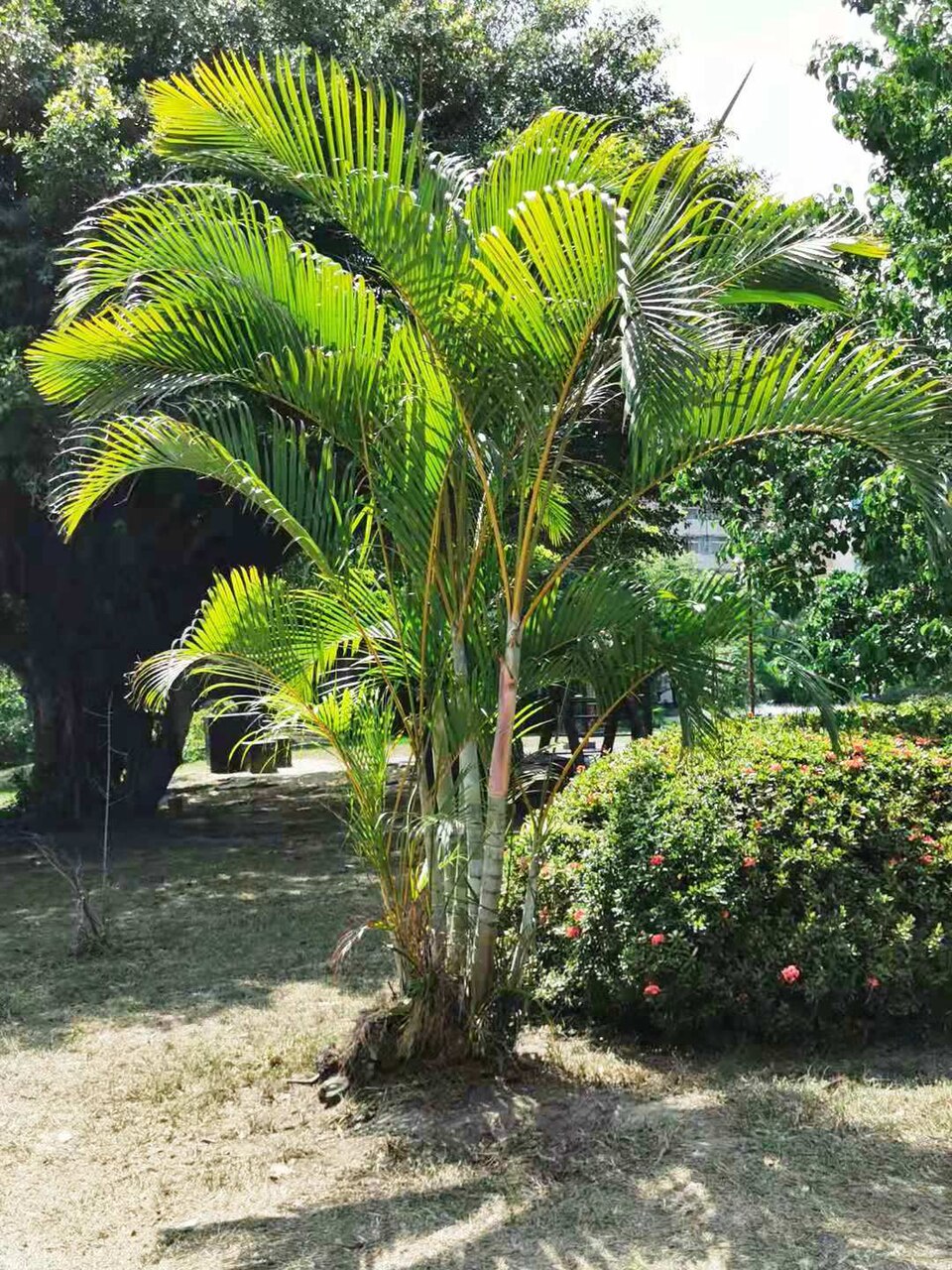
Dypsis lutescens
A full, feathery screen for lobbies and outdoor borders.
 Plant care guide
Care guide
- 1Bright direct light
- 2Bright indirect light
- 3Medium light
- 4Low light
Watering requirements
Water every 5–7 days, letting the soil dry to the right level between waterings.
Sunlight requirements
Needs bright light, including some direct sun. Keep it near a bright window or in an open, sunny spot.
Humidity requirements
Normal room humidity will do. Keep it away from direct AC airflow.
Pet-friendly plant?
Yes, listed as non-toxic to cats and dogs by the ASPCA.
Care level
Moderate
Best setting
Indoor · Outdoor
About Areca Palm
Clustering fronds give good visual coverage fast, indoors as a floor plant near bright windows or outdoors as a screening or border plant on campus grounds.
Fast-filling feathery fronds; needs bright light and steady moisture.
Where it works best
- Lobby feature planting
- Campus borders & screening
How to care for Areca Palm
Sunlight
Needs bright, indirect light indoors — near a bright window. Outdoors, it does well in filtered sun or light shade.
Water
Keep the soil lightly and evenly moist, but never waterlogged — roughly every 5–7 days, adjusting for season. Let the top few centimetres dry between waterings.
Humidity & temperature
Likes average to higher humidity at 18–32°C. Dry AC air commonly browns the frond tips; group plants together or move away from vents.
Soil & feeding
Use a well-draining, peaty potting mix. Feed with a palm or balanced fertiliser every 6–8 weeks in the growing season.
Pruning
Trim only fronds that are fully brown or dead. Avoid cutting green fronds or the growing point.
Propagation
Palms are normally grown from seed or by dividing clumps at repotting. Division is best left to a horticulturist, as damaged roots recover slowly.
Common problems
- Symptom
Brown frond tips
CauseDry air or salts in tap water; trim only the brown part.
- Symptom
Yellowing lower fronds
CauseNatural ageing, or overwatering.
- Symptom
Webbing or speckled leaves
CauseSpider mites, common in dry air — wipe the fronds and improve humidity.
Frequently asked questions
Can I cut off the brown tips?
Yes, trim just the brown tip with clean scissors, following the natural shape of the frond. Do not cut into green tissue.
How big will it get indoors?
Growth is slow indoors. Most palms in this range reach a manageable height for a lobby or corner, and rarely outgrow the space within a few years.
Is it safe for pets and children?
The ASPCA lists this plant as non-toxic to cats and dogs (checked October 2026). Even so, discourage chewing, as any plant can cause mild stomach upset if eaten in quantity.
Care guidance is general advice for Indian indoor and outdoor conditions. For plants in a Bonita maintenance programme, our team looks after watering and feeding for you.