
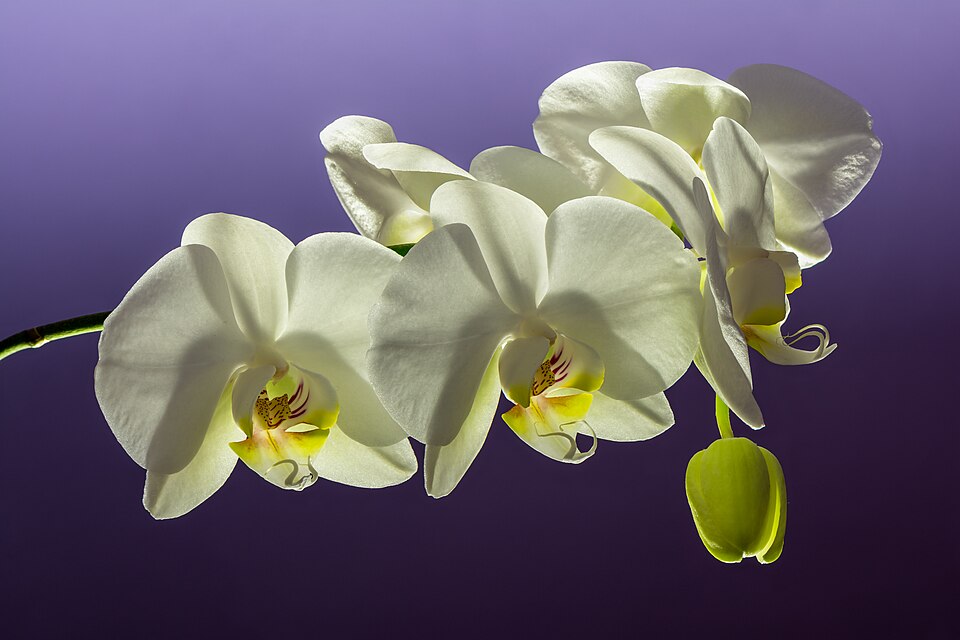
Orchid
Phalaenopsis sp.
Elegant blooms for a reception desk or gifting order.
 Plant care guide
Care guide
- 1Bright direct light
- 2Bright indirect light
- 3Medium light
- 4Low light
Watering requirements
Water every 7–10 days, letting the soil dry to the right level between waterings.
Sunlight requirements
Thrives in medium to bright indirect light. Not suited to intense, direct sun.
Humidity requirements
Normal room humidity will do. Keep it away from direct AC airflow.
Pet-friendly plant?
Not verified. Keep it out of reach of pets and check with your vet if unsure.
Care level
Moderate
Best setting
Indoor
About Orchid
A premium-feel flowering plant that holds its blooms for weeks — a common request for reception desks, executive offices and higher-end corporate gifting orders.
Elegant, long-lasting blooms; water thoroughly but let it dry between drinks.
Where it works best
- Reception desk feature
- Corporate gifting
How to care for Orchid
Sunlight
Needs bright, indirect light — an east-facing window is ideal. Direct midday sun burns the leaves, and too little light means no flowers.
Water
Water thoroughly when the bark mix is nearly dry, usually every 7–10 days, and let all the water drain out. Never leave the pot standing in water.
Humidity & temperature
Likes moderate to high humidity and 18–30°C. A slight drop in night temperature helps trigger flowering.
Soil & feeding
Grow in a bark-based orchid mix, not garden soil. Feed with an orchid fertiliser at quarter to half strength every 2–3 weeks while in growth.
Pruning
After flowering, cut the spike just above a node, or at the base if it turns brown. Remove only dead roots and leaves.
Propagation
Phalaenopsis can produce small plantlets (keikis) on the flower spike; pot them once they have a few roots. Otherwise, buy new plants.
Common problems
- Symptom
Flowers dropping early
CauseCold drafts, dry air, or moving the plant.
- Symptom
Wrinkled, limp leaves
CauseUnderwatering, or root damage from overwatering.
- Symptom
Healthy leaves but no new flowers
CauseNot enough light, or no cool night period.
Frequently asked questions
What do I do after the flowers fall?
Cut the spike just above a node on the stem or at the base if it has turned brown. Keep watering and feeding; many orchids bloom again in a few months.
Can I use ice cubes to water it?
It is better to water thoroughly with room-temperature water and let it drain. Cold ice can stress the roots.
Is it safe for pets and children?
Keep Orchid out of reach of pets and small children. Many ornamental plants can irritate the mouth or stomach if chewed. If a pet or child eats part of the plant, contact a vet or doctor.
Care guidance is general advice for Indian indoor and outdoor conditions. For plants in a Bonita maintenance programme, our team looks after watering and feeding for you.