
Shankapushpi
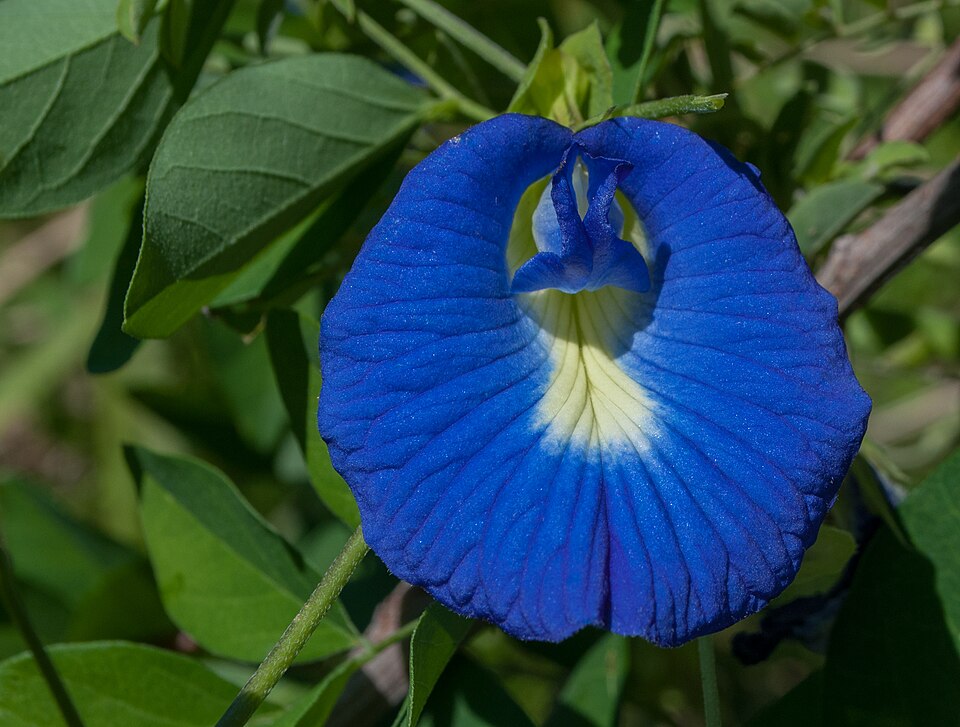
Clitoria ternatea
A twining climber with deep blue flowers.
 Plant care guide
Care guide
- 1Bright direct light
- 2Bright indirect light
- 3Medium light
- 4Low light
Watering requirements
Water 2–3 times a week, letting the soil dry to the right level between waterings.
Sunlight requirements
Needs bright light, including some direct sun. Keep it near a bright window or in an open, sunny spot.
Humidity requirements
Normal room humidity will do. Keep it away from direct AC airflow.
Pet-friendly plant?
Not verified. Keep it out of reach of pets and check with your vet if unsure.
Care level
Easy
Best setting
Outdoor
About Shankapushpi
A fast-growing climber with delicate leaves and striking deep blue flowers, grown on trellises, fences and pergolas in full sun. Also valued as a traditional Ayurvedic herb.
A fast twining climber with deep blue flowers; give it a trellis and full sun.
Where it works best
- Trellises & pergolas
- Garden fences
How to care for Shankapushpi
Sunlight
Needs full sun for the best growth and flowering. In shade, it grows leggy and flowers sparsely.
Water
Water regularly, 2–3 times a week in hot weather. Keep the soil moist while it establishes, then water when the top few centimetres dry out.
Humidity & temperature
Thrives in warm conditions and tolerates heat well. It grows fastest through the warm months.
Soil & feeding
Plant in well-drained, fertile soil with a trellis, fence or pergola to climb. Feed every 6–8 weeks in the growing season.
Pruning
Prune after flowering to keep growth in check and encourage branching.
Propagation
Easily grown from seed: soak the seeds overnight, sow in warm weather and keep the soil moist until they sprout.
Common problems
- Symptom
Lots of leaves, few flowers
CauseToo much nitrogen or too little sun.
- Symptom
Aphids on new growth
CauseCommon on soft shoots — wash off with water or treat early.
- Symptom
Leggy, sparse growth
CauseNot enough light; prune to encourage branching.
Frequently asked questions
How do I train it?
Guide the young stems onto a trellis, wire or fence and tie them loosely. Once established, the plant twines on its own.
When should I prune?
After a flush of flowering, trim back long stems to keep it tidy and encourage fresh growth.
Is it safe for pets and children?
Keep Shankapushpi out of reach of pets and small children. Many ornamental plants can irritate the mouth or stomach if chewed. If a pet or child eats part of the plant, contact a vet or doctor.
Care guidance is general advice for Indian indoor and outdoor conditions. For plants in a Bonita maintenance programme, our team looks after watering and feeding for you.