
Bird's Nest Fern
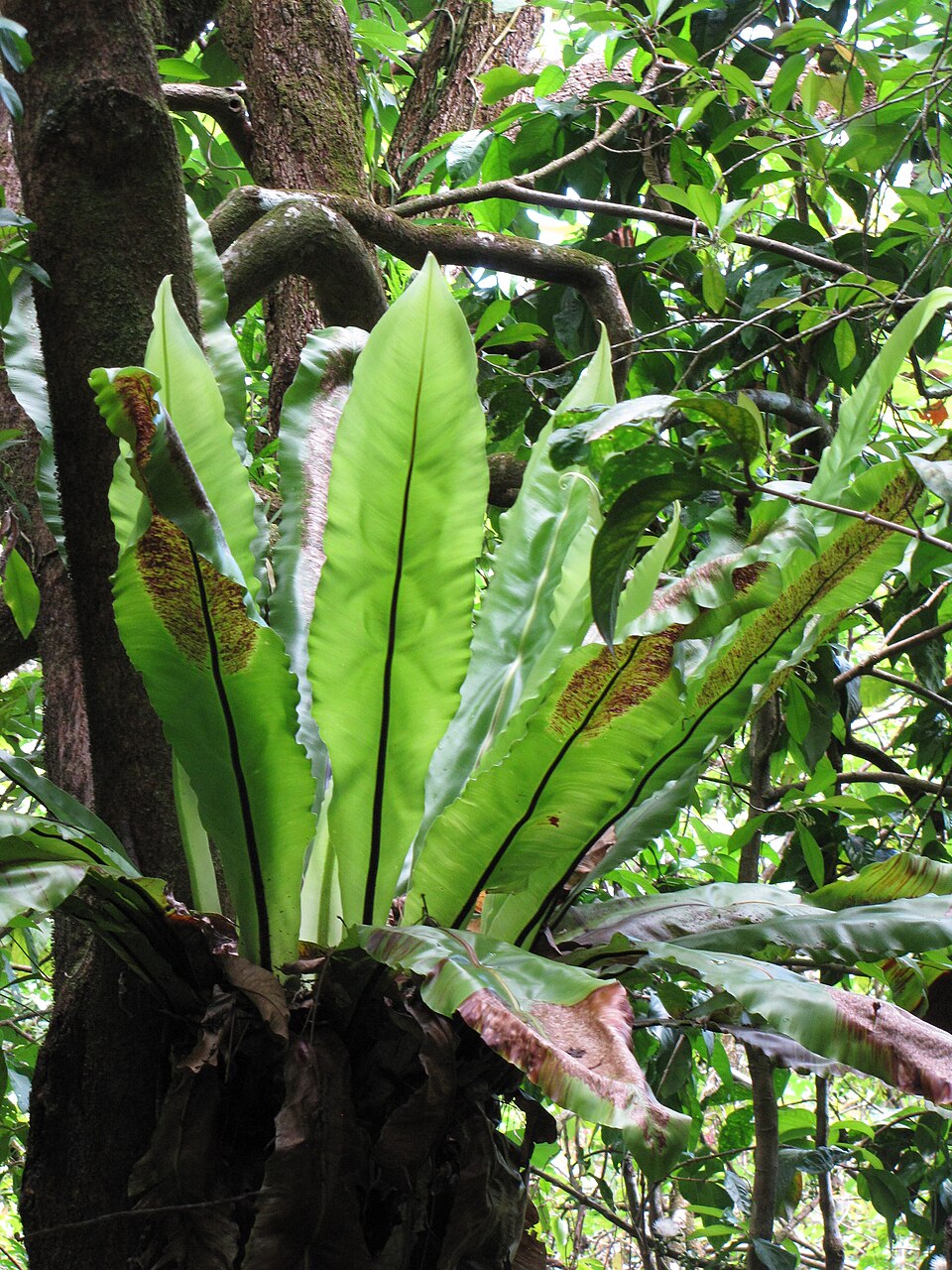
Asplenium nidus
Wavy rosette fronds that handle low light better than most ferns.
 Plant care guide
Care guide
- 1Bright direct light
- 2Bright indirect light
- 3Medium light
- 4Low light
Watering requirements
Water every 5–7 days, letting the soil dry to the right level between waterings.
Sunlight requirements
Tolerates low to medium indirect light. Not suited to intense, direct sun.
Humidity requirements
Normal room humidity will do. Keep it away from direct AC airflow.
Pet-friendly plant?
Not verified. Keep it out of reach of pets and check with your vet if unsure.
Care level
Easy
Best setting
Indoor
About Bird's Nest Fern
Unlike most ferns, this one tolerates lower light and typical office humidity reasonably well, holding its wavy, glossy rosette shape without constant misting.
Wavy, glossy fronds; more tolerant of low light and dry air than most ferns.
Where it works best
- Low-light cabins and cubicles
- Breakout & lounge areas
How to care for Bird's Nest Fern
Sunlight
Prefers bright shade or medium, indirect light. Direct sun scorches the fronds, but very dim spots slow growth.
Water
Keep the soil lightly moist and water around the edge of the plant — never into the central rosette, which can rot. Roughly every 5–7 days.
Humidity & temperature
Loves humidity and warmth, 18–30°C. Place it away from AC vents and group it with other plants to raise the humidity around it.
Soil & feeding
Use a light, peat-rich mix that holds moisture but drains. Feed lightly at half strength every 6–8 weeks in the growing season.
Pruning
Cut dead or brown fronds at the base. Light trimming keeps the plant looking fresh.
Propagation
Not practical at home: it grows from a single rosette and cannot be divided. Nurseries grow it from spores, so buy a new plant to expand the planting.
Common problems
- Symptom
Crispy, brown fronds
CauseDry air or the soil drying out completely.
- Symptom
Yellowing fronds
CauseOverwatering, or too much direct light.
- Symptom
Pale, washed-out fronds
CauseToo much sun.
Frequently asked questions
Does it need misting?
Misting helps only briefly. A better fix is to keep the plant on a tray of damp pebbles, group it with other plants, or choose a more humid spot.
Why is it shedding fronds?
Some shedding is natural, but heavy loss usually means dry air, drafts, or irregular watering. Trim dead fronds at the base.
Is it safe for pets and children?
Keep Bird's Nest Fern out of reach of pets and small children. Many ornamental plants can irritate the mouth or stomach if chewed. If a pet or child eats part of the plant, contact a vet or doctor.
Care guidance is general advice for Indian indoor and outdoor conditions. For plants in a Bonita maintenance programme, our team looks after watering and feeding for you.